

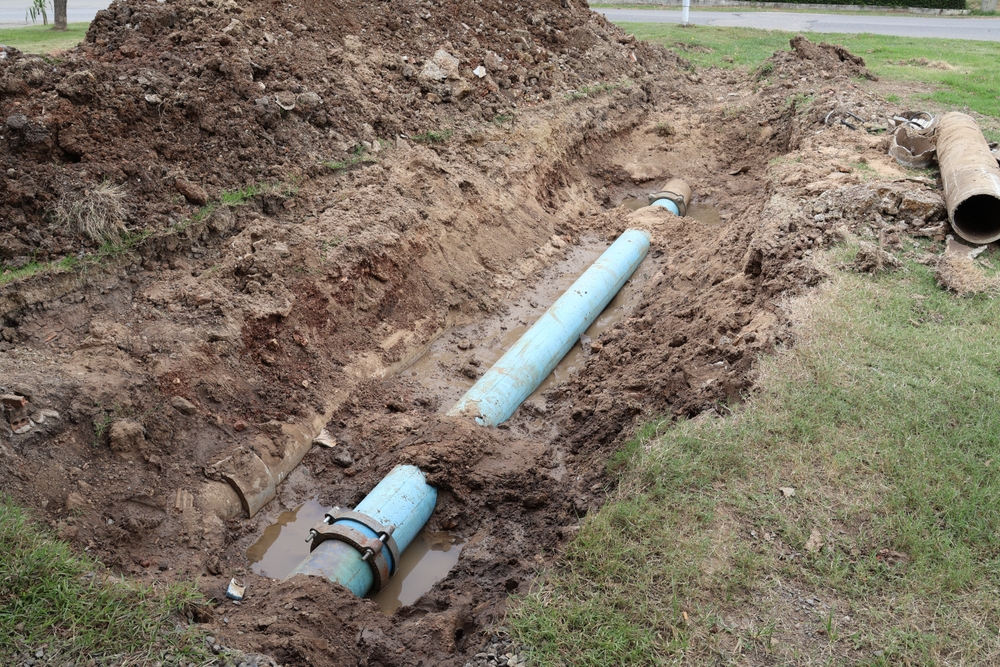
Commercial development depends on more than what eventually appears above ground. In Dalton, GA, underground water, sewer, electrical, communications, and other utility infrastructure can determine whether a commercial site progresses smoothly or runs into costly complications.
Professional utility excavation helps create the trenches, access, grading, and site conditions needed to install or service underground infrastructure correctly. For commercial projects, careful excavation also helps protect existing utilities, maintain workable site conditions, and keep utility installation coordinated with the larger construction schedule.
What local developers and property owners should know
-
Utility excavation should be coordinated with site plans and known underground infrastructure before digging begins.
-
Dalton commercial sites can involve established utility networks, particularly in developed areas and along major transportation and business corridors.
-
Northwest Georgia terrain, drainage conditions, and soil characteristics can affect excavation methods and trench stability.
-
Commercial utility work often requires coordination among excavators, utility providers, general contractors, engineers, inspectors, and other trades.
-
Proper backfilling and site restoration matter because underground work can affect future pavement, landscaping, drainage, and building access.
Why Is Professional Utility Excavation Important for Commercial Development in Dalton?
Professional utility excavation is important because commercial underground infrastructure must be installed in the correct location, at the required depth and grade, while accounting for existing utilities and surrounding construction. In Dalton, careful planning is especially valuable on active commercial properties and developed sites where underground conditions may be complex.
Commercial development can require water lines, sewer connections, stormwater infrastructure, electrical service, communications conduit, and other underground systems. Each installation has to fit into the overall site plan without creating unnecessary conflicts with foundations, parking areas, roads, sidewalks, or drainage features.
Grade-1 Underground provides excavation services for underground utility projects. We understand that excavation is one part of a larger construction process, so our work must support the contractors, utility professionals, and other trades involved in moving the project forward.
What Do Local Conditions Mean for Utility Excavation?
Local conditions mean utility excavation around Dalton must account for existing development, changing terrain, drainage, access, and the characteristics of each individual site. Northwest Georgia commercial properties can range from previously developed parcels near established business corridors to larger sites where substantial grading and infrastructure installation are required.
Dalton is the county seat of Whitfield County and sits along the I-75 corridor, with commercial activity extending toward areas such as Rocky Face and Tunnel Hill and throughout the surrounding region. Nearby communities including Ringgold and Calhoun also contribute to a busy regional development environment.
Rather than assuming two properties will excavate the same way, professional crews evaluate the conditions actually present. Soil, elevation changes, existing improvements, construction traffic, and the location of known utilities can all influence the excavation plan.
How Does Utility Excavation Affect a Commercial Project?
Utility excavation affects a commercial project by influencing scheduling, site access, infrastructure installation, and the work of other construction trades. A poorly coordinated trench or unexpected underground conflict can interrupt subsequent work, while organized excavation helps the project team move from underground infrastructure toward later phases of site development.
This is particularly important for Dalton businesses developing or improving properties where access must be coordinated around construction activity. Excavation can temporarily affect vehicle routes, equipment movement, staging areas, and work zones.
The impact continues after utilities are installed. Appropriate backfilling and restoration help prepare excavated areas for the next construction phase, whether that involves pavement, concrete, landscaping, or additional grading.
What Warning Signs Suggest a Project Needs Experienced Utility Excavation?
A commercial project needs experienced utility excavation when underground work involves multiple systems, existing development, limited access, significant trenching, or coordination with several contractors. Recognizing these conditions early gives Dalton developers and project managers an opportunity to plan excavation before underground work becomes a bottleneck.
Common signs include:
-
The site contains known or suspected existing underground utilities.
-
New water, sewer, electrical, or communications infrastructure must cross developed portions of the property.
-
Excavation will occur near roads, parking areas, foundations, or other improvements.
-
The site has elevation or drainage challenges that affect trenching.
-
Several trades need access to the same portion of the property.
-
The project requires extensive trenching or underground connections.
-
Construction sequencing leaves a limited window for utility installation.
These conditions do not automatically indicate a problem. They indicate that excavation planning and coordination deserve close attention.
When Should a Commercial Developer Call a Professional Excavation Contractor?
A commercial developer should involve a professional excavation contractor before underground utility installation begins, preferably early enough to coordinate plans, access, sequencing, and known site conditions. On Dalton projects, early coordination can help identify practical excavation considerations before crews and equipment are already mobilized around the work area.
Basic site observations can help owners understand where access points, paved areas, buildings, and visible utility features are located. Actual excavation, however, should not begin based on visual assumptions about what is underground.
Utility locating, applicable permits, project plans, and coordination with the appropriate parties should be addressed before excavation. Dalton Utilities may be one relevant local entity depending on the property and utility involved, but the required coordination depends on the specific project.
What Common Site Conditions Can Complicate Utility Excavation?
The most common complications involve existing utilities, restricted access, changing soil or ground conditions, drainage, and conflicts with other construction activities. Around Dalton and Whitfield County, established commercial areas can require especially careful coordination because new infrastructure may need to fit around utilities and improvements already serving the property or surrounding area.
Existing infrastructure: Previously developed sites may contain multiple underground systems. Their locations need to be addressed before excavation proceeds.
Site access: Excavators, trucks, materials, and other construction equipment all need space to operate.
Drainage: Trenches and disturbed soil can interact with surface water, making drainage planning an important part of site management.
Construction sequencing: Excavating too early or too late can interfere with grading, foundations, paving, or other scheduled work.
Ground conditions: Actual excavation conditions may differ across a property, so field conditions should guide the work rather than assumptions.
How Can Commercial Projects Prepare for Utility Excavation?
Commercial projects can prepare for utility excavation by confirming plans, identifying known utilities, establishing access, coordinating contractors, and deciding how excavated areas will be managed afterward. For projects in Dalton, preparation should also consider construction traffic, drainage, nearby businesses, and how underground work fits into the overall site schedule.
Before excavation starts, project teams should review the intended utility route and identify potential conflicts. Work areas should remain accessible to the equipment required for excavation and material handling.
Safe preparation also means knowing where DIY involvement stops. Property owners can review plans and discuss operational needs, but locating, exposing, and excavating around underground infrastructure requires appropriate professional procedures and coordination.
What Results Should You Expect From Professional Utility Excavation?
Professional utility excavation should leave the project with appropriately prepared trenches or excavated areas that support the planned underground installation and subsequent construction work. Results depend on the project design, field conditions, utility requirements, and scope, so commercial owners should expect site-specific planning rather than a one-size-fits-all excavation process.
For a Dalton commercial project, that may include excavating utility routes, coordinating around existing infrastructure, managing removed material, supporting installation access, and backfilling completed areas as required by the scope.
The goal is not simply to move dirt. Excavation should support the underground system and the construction activities that follow it.
What Utility Excavation Mistakes Can Cause Commercial Project Problems?
Utility excavation mistakes can cause delays, rework, access problems, or conflicts with existing and planned infrastructure. Commercial projects around Dalton benefit from treating excavation as coordinated construction work rather than an isolated digging task, particularly when several utilities and trades share a limited work area.
Mistake: Excavating before underground conditions are addressed.
Consequence: Existing infrastructure may conflict with the proposed route.
Better approach: Complete the required locating and project coordination before digging.
Mistake: Ignoring construction sequencing.
Consequence: Open or recently backfilled areas can interfere with other crews.
Better approach: Coordinate excavation with the broader project schedule.
Mistake: Planning only for the trench.
Consequence: Equipment, spoil, materials, and trucks may have inadequate working space.
Better approach: Plan the entire excavation work zone.
Mistake: Overlooking restoration.
Consequence: Later paving, grading, or landscaping work may become more difficult.
Better approach: Consider backfilling and subsequent site use from the beginning.
What Is a Common Commercial Utility Excavation Scenario in Dalton?
A common Dalton scenario involves a commercial property that needs new underground utility connections while other site improvements are underway. This is a representative scenario, not a Grade-1 Underground case study, and the exact process would depend on the project’s plans, utility requirements, site conditions, and construction schedule.
Imagine a property undergoing redevelopment near an established commercial corridor. Existing pavement and utilities are already present, while new construction requires additional underground service.
The excavation team must work within the planned utility route while preserving access for other contractors. Once installation is complete, the excavated area must be backfilled appropriately for whatever comes next. Coordination is what connects each stage.
What Services Support Underground Utility Projects?
Underground utility projects are supported by excavation, trenching, site preparation, backfilling, and related earthwork appropriate to the specific project scope. In Dalton, these services can support new commercial construction, redevelopment, infrastructure improvements, and properties that need access to underground systems for installation or other planned work.
At Grade-1 Underground, we can discuss the excavation needs associated with a commercial underground utility project and determine how the requested work fits the site.
How Does Professional Excavation Compare With Informal Digging Approaches?
Professional excavation differs from informal digging because commercial utility work requires planning, equipment, site coordination, and attention to existing infrastructure. While property owners can help identify project goals and known site information, actual utility excavation around Dalton should be approached as construction work with consequences for safety, scheduling, and future site improvements.
A small surface project and a commercial utility trench are fundamentally different scopes. Commercial underground work can involve depth, grade, equipment access, multiple utilities, and coordination with engineered plans or other construction requirements.
Choosing the appropriate approach should therefore be based on the scope and conditions of the project, not simply on how much soil appears to need removal.
Where Does Grade-1 Underground Provide Utility Excavation Services?
Grade-1 Underground serves commercial excavation needs from Dalton, GA, with work in the surrounding Northwest Georgia area depending on project location and scope. Properties throughout Whitfield County and nearby communities may have different site, utility, access, and excavation requirements.
For projects outside Dalton, contact us to confirm whether your location falls within our current service area.
What Can Happen When Utility Excavation Is Poorly Planned?
Poorly planned utility excavation can contribute to construction delays, unnecessary rework, site access issues, and conflicts between underground infrastructure and later phases of development. On active Dalton commercial projects, those complications can affect more than the excavation crew because underground work often connects directly to several other parts of the construction schedule.
Waiting until the last moment to coordinate excavation can also limit options for equipment access and sequencing. Early planning gives project teams more opportunity to identify conflicts and establish an efficient order of work.
Frequently Asked Questions About Commercial Utility Excavation
Why is professional utility excavation important in Dalton, GA?
Professional utility excavation helps commercial projects prepare for underground infrastructure while accounting for existing utilities, access, site conditions, and construction sequencing. In Dalton, where projects may involve established commercial properties or new development, coordinated excavation can help underground work fit more effectively into the overall construction process.
What utilities may require excavation on a Dalton commercial property?
Commercial excavation may support water, sewer, electrical, communications, stormwater, or other underground infrastructure depending on the project. The systems involved vary by property and development plan. Project documents and the appropriate utility providers should determine what infrastructure is present and what excavation is required.
Should utilities be located before excavation begins in Whitfield County?
Yes, applicable underground utilities should be addressed through the appropriate locating and coordination process before excavation begins. Visible utility features do not provide enough information to determine everything below the surface. Commercial projects should follow applicable requirements and project procedures before digging around existing infrastructure.
Can utility excavation affect a commercial construction schedule?
Yes, utility excavation can affect the construction schedule because underground work often must occur before paving, landscaping, and certain other site improvements. Coordinating excavation with other contractors helps reduce conflicts over access and work areas and can make the transition between construction phases more orderly.
Are developed commercial sites in Dalton more complicated to excavate?
Developed commercial sites can be more complicated because existing pavement, buildings, utilities, drainage features, and ongoing property access may restrict where equipment can work. Complexity depends on the individual property, so existing development should be evaluated as part of excavation planning rather than assumed to create a particular condition.
Does Northwest Georgia terrain affect utility excavation?
Yes, terrain and site-specific ground conditions can influence excavation methods, equipment access, drainage management, and trench construction. Conditions can vary even within the same commercial property, which is why field conditions and project requirements should guide excavation decisions throughout Northwest Georgia.
Who coordinates commercial utility excavation?
Coordination may involve the property owner or developer, general contractor, excavation contractor, engineers, utility providers, inspectors, and specialty trades, depending on the project. Establishing responsibilities before excavation begins helps everyone understand the planned utility route, schedule, access requirements, and work sequence.
When should I schedule utility excavation for a Dalton development?
Utility excavation should be scheduled according to the overall construction sequence and early enough to allow required locating, planning, and coordination to occur. The correct timing varies by project, but waiting until another trade immediately needs the trench can create unnecessary scheduling pressure.
Build Your Dalton Commercial Site From the Ground Down
Successful commercial development depends on infrastructure that most customers and visitors will never see. Careful utility excavation helps create the groundwork for underground systems while supporting the contractors and construction phases that follow.
Prepare Your Dalton Commercial Project for the Work Below Ground
We approach utility excavation with attention to the site, the planned work, and the needs of the larger project.